
SBI and other public sector banks have decided to lend Rs 4,000 crore to Patanjali Ayurved for the acquisition of Ruchi Soya, which was facing bankruptcy proceedings under the Insolvency and Bankruptcy Code. The money lent by banks will help the PSBs to settle their exposure to Ruchi Soya with a haircut of 65 per cent. Banks led by SBI and others had earlier made claims of over Rs 12,146 crore against Ruchi Soya after the company failed to repay its loans.

India's consumer price index (CPI)-based inflation could ease in the coming months thanks to the arrival of kharif crops, lower international commodity prices, and a pass through of lower input costs to consumers, the finance ministry said in its Monthly Economic Review (MER) for October, which was released on Thursday. The MER, however, warned that the global macroeconomic situation remained precarious and a recession in many advanced economies would impact India's exports. "Easing international commodity prices and new Kharif arrival are set to dampen inflationary pressures in the coming months.

Anup Roy and Krishna Kant on the challenges the public sector banks face in revitalising themselves

India retains the tag of the fastest growing country among the world's major emerging economies

In the June quarter of FY24, 51 per cent of consumers who took small-ticket personal loans already had more than four credit products at the time of accessing yet another new loan, compared with just 17 per cent in the June quarter of FY20, points out Tamal Bandyopadhyay.

I hope those who underestimate Rajeev Chandrasekhar will be proved wrong in this fight for Thiruvananthapuram's future, notes Rajeev Srinivasan.

The BSE Mid-Cap index was currently up 0.81%.

'We should look at is full year's growth rather than quarter numbers.'

Breaking the streak of continuous fall in outstanding amounts, non-resident Indian (NRI) deposits rose for the first time in the financial year to $134.54 billion in October 2022. The figure was $133.67 billion in September. Reserve Bank of India (RBI) data showed that NRI deposits were in shrinking mode for the first six months of FY23. They fell to $133.67 billion in September from $139 billion in March.

With this subdued forecast, India is likely to record its worst growth performance since the 1991 liberalisation. However, it is among the only two major economies, which will register a positive growth rate in 2020. The other being China, for which the IMF has projected a growth rate of 1.2 per cent.

RBI will make a presentation on January 24 before the panel on the state of NPAs and stressed loans.

Investors who decide to enter medium to long-duration funds should be cognisant of the risk.

The downgraded World Bank forecast follows a similar move by the International Monetary Fund, which cut its growth forecasts two months ago

Voices from the Treasury are clamouring for lowering rates as this would boost demand.
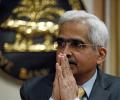
Reserve Bank Governor Shaktikanta Das on Friday said the rupee is holding up relatively well when compared to the currencies of emerging market peers and advanced economies. Days after the domestic currency breached the 80-level against the dollar, Das said Reserve Bank of India (RBI) has zero tolerance for volatile and bumpy movement in the rupee and added that the central bank actions have helped in smoother movement. He said RBI has been supplying US dollars to the market to ensure adequate supply of liquidity and also clarified that the central bank does not target a particular level for the currency.

'The CM kept his cool, but his adviser was liberal with filthy language.' Tamal Bandyopadhyay recreates the diary of a general manager in a public sector bank, providing a glimpse of how they balance their work and life.
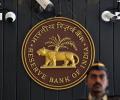
The Reserve Bank of India (RBI) is precariously balancing two opposing objectives - maintaining easy financial condition in the domestic market, while ensuring external stability - and economists have started taking note. They say India is going through the classic trilemma of the 'Impossible Trinity'. The RBI cannot have an independent monetary policy (setting domestic interest rates) in an environment of an open capital account and flexible exchange rates. What is even more complicated for the central bank now is that financial market stability overlays all the other three objectives.

Metals, auto and banking shares were in the limelight in this session; the FMCG pack, however, ended lower.

Favouring a soft interest rate bias, the State Bank of India on Wednesday set a target of reducing its non-performing assets to two per cent of its advances by this fiscal end.

Slow credit off-take to put pressure on margins

The Enforcement Directorate arrested Yes Bank founder Rana Kapoor under money-laundering charges in Mumbai in the early hours of Sunday, officials said. The banker was held under the provision of the Prevention of Money Laundering Act (PMLA) around 3 am as he was allegedly not cooperating in the probe, they said.

India's GDP estimates for 2020-21 show that the economy is expected to perform much better than earlier projections by different agencies, indicating a sustained V-shape post-lockdown recovery, experts said. The first Advance Estimates (AE) by the National Statistics Office (NSO) has projected a contraction of 7.7 per cent in the real GDP during 2020-21. This was better than the projections by certain international agencies like the IMF and World Bank.

'The Reserve Bank's independence has remained a work in progress, an enduring challenge that the nation has been grappling with on an ongoing basis,' says RBI Deputy Governor Dr Viral Acharya.

The International Monetary Fund (IMF) on Tuesday slashed India's growth forecast for 2022-23 (FY23) by 80 basis points to 7.4 per cent, citing less favourable external conditions and rapid policy tightening by the central bank. In its update to the April World Economic Outlook, the IMF said that though a global recession in 2022 was ruled out with a growth estimate of 3.2 per cent, the balance of risks was squarely to the downside, driven by a wide range of factors that could adversely affect the global economic performance. "The risk of recession is particularly prominent in 2023, when in several economies growth is expected to bottom out, household savings accumulated during the pandemic will have declined, and even small shocks could cause economies to stall.

TDS merely means the bank will pay you the entire interest amount without forwarding the tax on it to the government.

Benchmark indices finished higher on hopes of economic reforms

This is the full text of the address to the nation by President Droupadi Murmu on the eve of India's 78th Independence Day.

Ajit Mishra, vice president, Research, Religare Broking, answers readers' queries on stocks they own or want to buy. Here are his replies to some of the 'buy, sell, hold, avoid or exit?' e-mails that we have received.

Interest rate and tenure are not the only two factors to consider.

Policymakers should aspire to restore the pre-Independence environment where the rupee was trusted and used all over South Asia, in Southeast Asia, in West Asia, and in East Africa, suggests Ajay Shah.

The 30-share Sensex ended higher by 177.46 points at 28,885.21 and the Nifty gained 63.90 points at 8,778.30.

The total direct tax collection stands at a little over Rs 9 trillion, giving the taxman just few days to reach the 2018-19 revised target of Rs 12 trillion., reports Shrimi Choudhary.
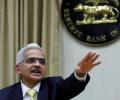
'The banking sector appears to be on course to recovery,' declares the RBI governor.
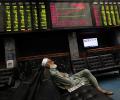
'Rawalpindi must downsize its quest for 'strategic depth' in Afghanistan and Kashmir,' suggests Matein Khalid.
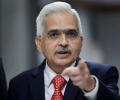
Reserve Bank Governor Shaktikanta Das on Wednesday said underlying economic activity in India continues to be strong, but external factors will cause some "dent" to the economy. Speaking at the BFSI Insight Summit 2022 organised by Business Standard, Das said the RBI tracks 70 fast moving indicators and most of them are in the "green box". It is the external sector, mired by a fear of recession or clear visibility about slowing growth in a large part of the world, where the challenges lie, he said, adding that the impact of external demand will "dent" the economy.

'We get to know secrets such as some of India's top-rated firms do not always make payments when due and many State-owned, listed, enterprises that borrow in bond markets default regularly.' 'Without naming the bank, he says that ever-greening of poor loans by a part of India's shadow banking lay at the doorstep of India's banking, notably 'one private bank'.' Viral Acharya's Quest for Restoring Financial Stability in India won't be music to many ears, observes Tamal Bandyopadhyay.

Chinese Premier Premier Li Keqiang said world economic recovery should not be driven by mainly China, but in concert with many countries.

Ahead of the 2023-24 Union Budget, the thinking at the top level of the central government is clear: Gross domestic product (GDP) growth of 6-6.5 per cent is a comfortable enough target for FY24 and the focus should be on fiscal consolidation to ensure that the sovereign cost of borrowing does not become prohibitively expensive in a high-interest rate environment, according to people in the know. Those aware of deliberations between the Prime Minister's Office (PMO) and the Ministry of Finance said while the Budget would look to strike a balance between infrastructure investment and welfare schemes, it is unlikely to be populist, though it will be the last full-year Budget before the 2024 Lok Sabha election. Incidentally, 6-6.5 per cent GDP growth is what the upcoming 2022-23 Economic Survey is expected to project for FY24.

Collectively, the pack of 12 has posted a 50 per cent rise in profits -- Rs 25,685 crore. On a quarter-on-quarter basis (that is, September over June), the rise is 68 per cent. Public sector banks have never had such a stellar performance, explains Tamal Bandyopadhyay.

If providing a stimulus to growth is the objective now, that would be best served by moving rates as quickly as possible to the bottom.
